Open Today Sales: 8:30 AM-8 PMOpen Today Service: 7:30 AM-6 PM





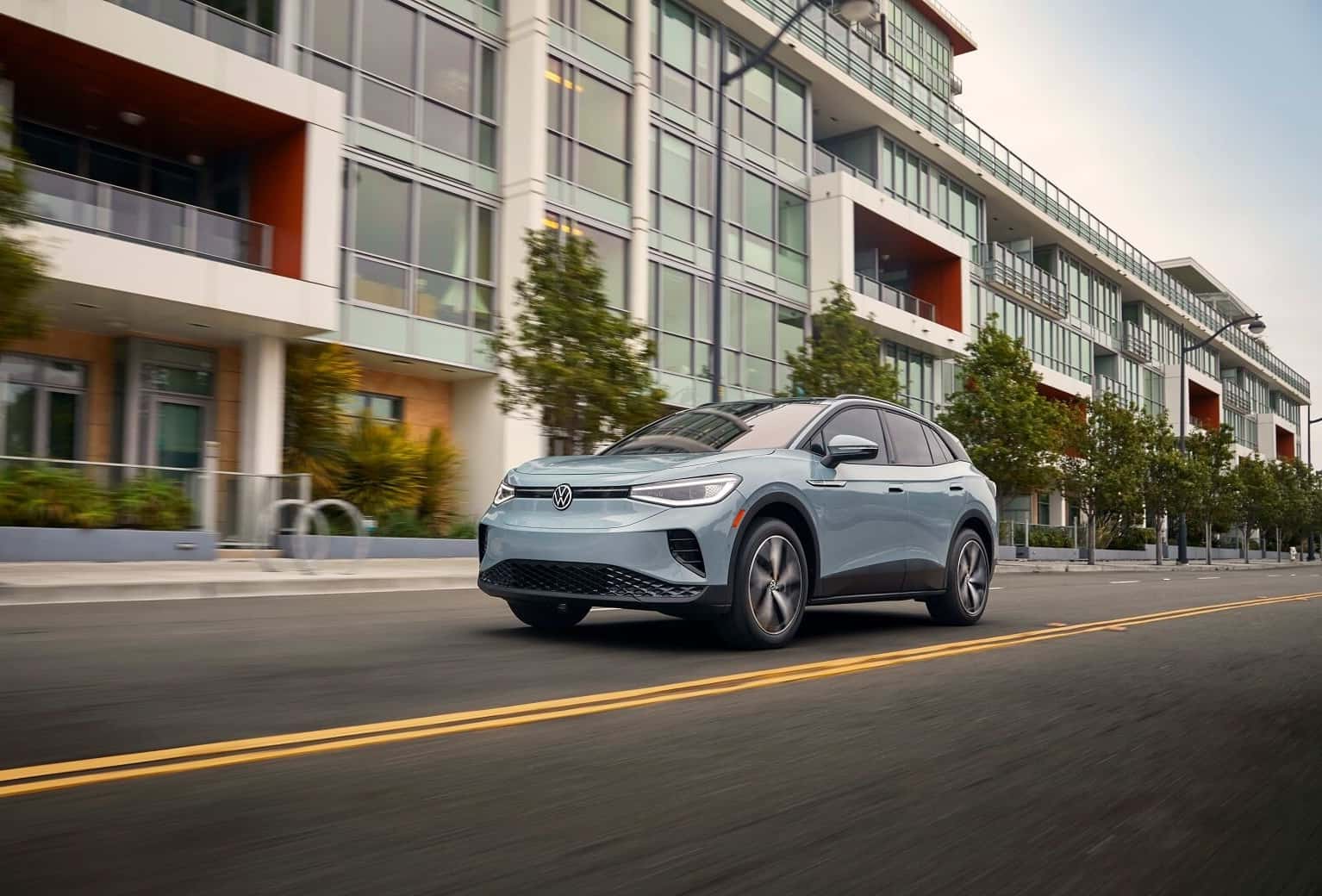
Life near Port Charlotte, Florida, is about balance—between work, family, and time at favorite spots like Bayshore Live Oak Park. For many drivers, that balance now includes choosing an electric vehicle. The Volkswagen ID.4 EV and the Hyundai IONIQ 5 are two popular options.
Both bring style and efficiency, but the real question is which fits better for daily life in places like North Port or Charlotte Harbor. At Port Charlotte VW, we’ve compared the details so you can see how the Volkswagen ID.4 vs the Hyundai IONIQ 5 stacks up in the areas that matter most.
Range is one of the first things families ask about. With the 2025 Volkswagen ID.4 Pro, you’ll have an EPA-estimated range of up to 291 miles on a full charge¹. That’s enough to handle commutes, errands, and even a beach day without worrying about plugging in mid-trip.
While efficient, the Hyundai IONIQ 5 tops out at an EPA-estimated 221 miles in some configurations². That gap can feel bigger than it looks, especially when your week includes driving between Port Charlotte and Sarasota or heading inland toward I-75 for longer trips.
Having those extra miles in the ID.4 doesn’t just mean convenience. It gives you more freedom to plan days without rearranging around charging stops. And when you need to charge, Volkswagen makes it easy to access the Electrify America network, one of the largest fast-charging providers in the U.S.
Daily life often comes down to space. The Volkswagen ID.4 delivers up to 64.2 cubic feet of cargo volume with the seats folded. There’s plenty of room for strollers, golf clubs, or luggage when family visits.
By comparison, the Hyundai IONIQ 5 provides closer to 59.3 cubic feet. While still useful, the smaller capacity can feel limiting if you carry kids' sports gear or beach umbrellas for a weekend trip to Charlotte Harbor.
Utility matters, even in an electric SUV. The Volkswagen ID.4, when properly equipped, can tow up to 2,700 pounds. That’s enough to handle a small trailer, pop-up camper, or even a lightweight boat for weekends on the water.
The Hyundai IONIQ 5’s towing tops out at around 2,300 pounds. It’s capable but doesn’t provide the same flexibility if you want to tow something heavier. For families around Port Charlotte, where trips to the Gulf often include gear or watercraft, that added strength in the VW ID.4 is a clear benefit.
The Volkswagen ID.4 provides up to about 64 cubic feet of cargo space with the rear seats folded. That extra room makes a difference for families carrying strollers, sports gear, or groceries. The Hyundai IONIQ 5 offers about 59 cubic feet, which is solid, but the VW ID.4 gives you more flexibility when needed.
Both vehicles support DC fast charging, but the Hyundai IONIQ 5 has an 800-volt system for faster peak rates under perfect conditions. The Volkswagen ID.4, however, offers stronger everyday convenience with its access to the Electrify America network. For Florida drivers, having a large, reliable charging network available makes road trips and daily commutes more seamless.
The VW ID.4 emphasizes comfort and practicality. It provides more headroom in both rows and cargo volume, which is handy for carpools or family beach trips. Did you know the VW ID.4 earned a 2023 IIHS Top Safety Pick+ when equipped with specific headlights?³ That recognition highlights the ID.4’s strength as a family-first vehicle.
The Volkswagen ID.4 vs Hyundai IONIQ 5 comparison highlights two forward-looking EVs, but the VW ID.4 often proves to be the more practical choice for families near Port Charlotte, North Port, and Charlotte Harbor, FL. Contact us at Port Charlotte VW and book a test drive to experience it yourself.
¹ 2025 ID.4 Pro EPA estimated total range is 291 miles. Actual mileage and range will vary and depend on several factors including driving and charging habits, accessory use, temperature and topography, battery age, load, and vehicle condition. Battery capacity decreases with time and use. See owner’s manual for details.
²EPA-estimated 221-mile driving range for 2025 IONIQ 5 N. All figures are EPA estimates and based on a fully charged battery. For comparison purposes only. Battery capacity decreases with time and use. Actual range will vary based on a number of factors, including vehicle options, driving conditions and habits, vehicle and battery's condition, battery temperature and outside temperature.
³Source: IIHS.